The Empty Aisle Effect: Why Dead Mall Walkthroughs Became Our Weirdest Comfort TV
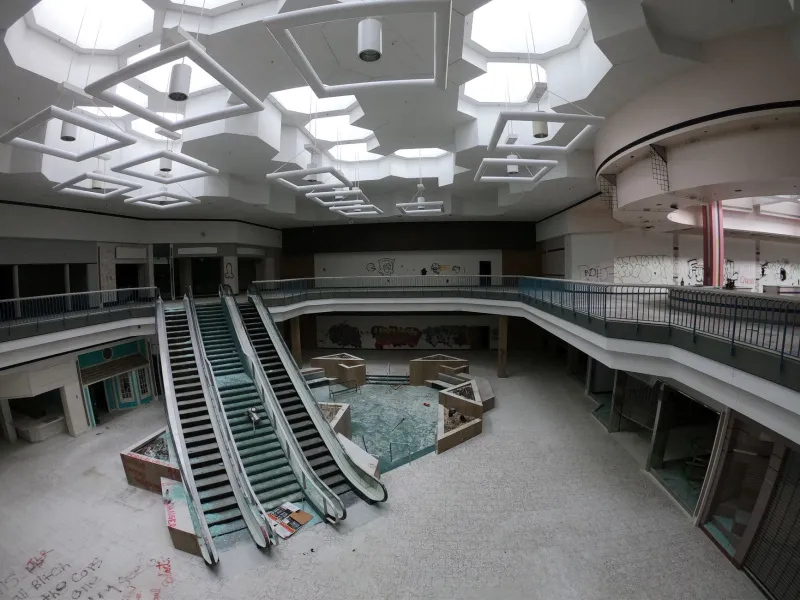
There’s a specific sound to a dead mall video: footsteps on tile, a distant HVAC hum, maybe a wind chime made of a loose ceiling panel. On YouTube and TikTok in 2026, that sound has become a strange kind of comfort food. Creators walk through emptied department stores, past shuttered Auntie Anne’s counters and Cinnabon stands, narrating softly or not at all. The videos are eerie, nostalgic, and—for a surprising number of viewers—weirdly soothing.
The trend isn’t brand new. Urban exploration channels have been documenting abandoned places for years. But the dead mall walkthrough has crossed over into something more mainstream: less trespassing thriller, more ambient television. In the US, where retail closures have reshaped suburbs and small cities for decades, these clips double as time capsules and bedtime stories. You can watch a mall die in high definition while eating cereal.
The Empty Aisle Effect
Part of the appeal is the absence of stakes. Nothing happens. That’s the point. A person walks. A camera pans. A store sign is missing a letter. The escalator is frozen. There’s no influencer shouting about a product, no jump cut, no urgent call to action. For viewers worn out by high-energy feeds, the dead mall video is the visual equivalent of a rainy afternoon.
Malls were once third places—not home, not work, not school. They were where teenagers loitered, families split up for an hour, and someone always knew a guy who worked at the food court. For Gen X and older millennials, the empty mall is a memory palace with the people removed. For younger viewers, it’s a haunted diorama of a world they barely got to inhabit. Either way, the emotion is complicated: sadness, relief, nostalgia, and a little thrill at seeing a familiar place with the lights half off.
Comfort, Not Creepiness
The videos work because they keep the creepy at arm’s length. You are not actually trapped in the mall. You can pause, scroll, or close the tab. The decay is controlled. The creator is a guide, not a victim. Some channels lean into ASMR—soft narration, crisp footsteps, no music. Others let the silence do the work. The comment sections become memory boards: 'I bought my prom shoes here.' 'My first job was at that Hot Topic.' 'I can smell the pretzels.'
That ritual of remembering is why these clips fit neatly into comfort viewing. They’re not about shopping. They’re about the version of America that shopping used to organize. The mall was a map of teenage freedom, family errands, and suburban Saturday afternoons. Watching one empty is a way of visiting without having to confront the crowd—or the fact that the crowd stopped coming.
Real Exploration vs. Staged Decay
The genre has a credibility problem, and creators know it. For every patient walkthrough with time stamps and local context, there’s a video that looks a little too cinematic: perfect debris, dramatic lighting, a gas mask, a whispered warning. Staged abandoned content is its own cottage industry. Some creators dress empty buildings with props or film in spaces that were never really malls. Others trespass, which is both illegal and a bad look for a genre built on nostalgia.
Viewers have gotten better at spotting the difference. Genuine exploration usually shows the boring parts: locked doors, security carts, fluorescent lights that still work, a manager who says no. Trusted creators explain how they got access, date their footage, name the town, and avoid pretending a vacant JCPenney is a supernatural event. They don’t manufacture a story. They document one. The best dead mall videos feel less like ghost hunts and more like local journalism with a slow zoom.
What the Trend Says About Us
The dead mall renaissance is not really about malls. It’s about American shopping habits, which have been migrating online and toward big-box stores for years. It’s about the way retail spaces get repurposed into churches, medical offices, pickleball courts, and storage. It’s about nostalgia as entertainment—a way to process change without having to argue about it.
In 2026, the videos keep going viral because they offer something rare: a quiet place on a loud Internet. They’re obituaries, comfort food, and free therapy for anyone who ever killed an afternoon at a food court. The malls may be empty. The memories are not.