Why 112 Is Suddenly Everywhere in American Comments (and Why It’s Not a Secret Code)
If you have spent any time in American comment sections lately, you may have noticed a strange little habit: someone posts “112” with no context, and a handful of people respond like they are in on a joke that everyone else just missed. It shows up under travel videos, panic memes, hotel-room tours, and posts about confusing foreign signage. In 2026, it has become one of those recurring internet breadcrumbs that is not quite a trend and not quite a mystery, but somehow keeps pulling people down a rabbit hole.
Here is the short answer: 112 is the emergency telephone number in most European Union countries and many other places around the world. In the United States, the number to call is 911. That is it. That is the whole code. But the reason it keeps popping up is less about emergency policy and more about what happens when a number from one part of the world wanders into another part of the internet.
A Number With a Day Job
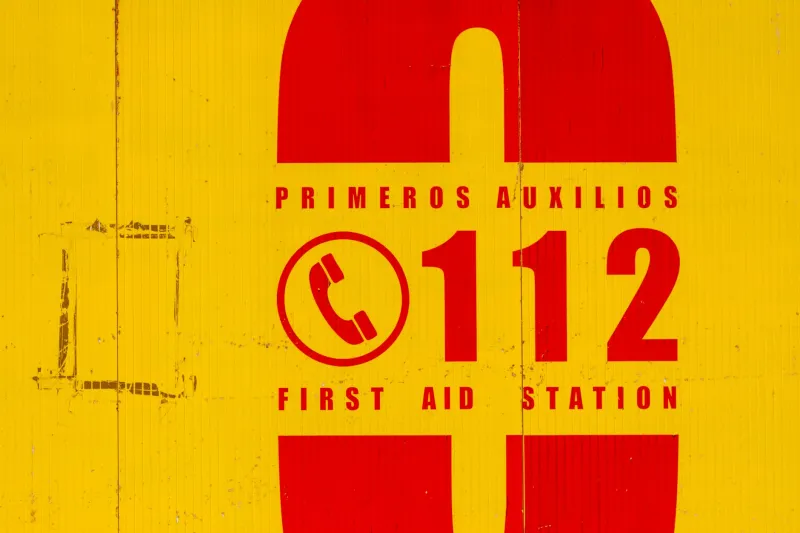
112 did not start as a meme. It is a real emergency number with a real purpose. The idea of a single European emergency number took shape in the late 1980s and early 1990s, and 112 became the standard across the EU. It is also used in many countries outside the EU, and on GSM mobile networks it is designed to be easy to reach—three digits, memorable, and often usable even when a phone is locked or has no SIM card, depending on the country and carrier.
That is useful if you are in Paris, Rome, Berlin, Madrid, or a long list of other places. It is less useful if you are in Ohio and your brain has suddenly decided to forget every emergency number it has ever known. The number is not a universal password. It is a local instruction. In the US, that instruction is 911.
How It Leaks Into American Feeds
The internet loves a small cultural mismatch. A travel creator films a hotel room and points out the emergency sticker by the door. The sticker says 112. The comments fill with Americans asking if that is a room number, a country code, or a secret menu. Someone replies “Europe.” Someone else replies “112.” The joke writes itself, mostly because it is not really a joke.
Then there are the panic memes. A person posts about a minor crisis—locked out, lost, late, mildly inconvenienced—and someone comments “112” as if it is the answer to everything. It is a bit, but it is also a tiny flex. Knowing that 112 is a European emergency number makes you feel like you have traveled, or at least like you have read a Wikipedia page. The comment is useless in the US, which is exactly why it is funny.
There is also the visual satisfaction. 112 is symmetrical in a way that 911 is not. It reads like a pattern. It looks good in a caption. It has the same low-effort energy as commenting “this” or dropping a single emoji. A number that already has a serious job can become a very unserious shorthand when it is detached from context.
The Joke Has Layers
The first layer is travel confusion. Americans see 112 on signs, keys, elevator panels, and hotel doors abroad, and the brain briefly short-circuits. The second layer is the correction. Someone explains that 112 is the emergency number in much of Europe, and someone else explains that 911 is for the US, and a third person mentions 999 in the UK or 000 in Australia. Suddenly the comment section is a mini geography lesson with terrible jokes.
The third layer is the inside-joke effect. Once you know what 112 means, you start noticing it. You see it in a meme, then in a travel video, then in a comment under a post that has nothing to do with emergencies. The number becomes a wink. It is not a secret code. It is just a piece of information that has been recycled into a bit.
And yes, there is a brand-name coincidence here. KCT112 is not named after the European emergency line, but we are not going to pretend the overlap is bad for business. A three-digit number is sticky. That is why it works in memes, and that is why it works on a website.
The Rabbit Hole Goes Global
Once you start looking into emergency numbers, the world gets pleasantly weird. The US and Canada use 911. The UK uses 999. Australia uses 000. Much of Europe uses 112. Some countries have multiple numbers for police, fire, and ambulance. Some have changed their systems over time. Some mobile networks route 112 even when the local number is different, which is helpful in a real emergency and confusing in a comment section.
That is the actual rabbit hole: not a hidden message, but a reminder that phone numbers are local customs. They feel obvious until you leave the country that taught them to you. A number that is life-or-death serious at home becomes a mildly disorienting detail abroad. The internet, being the internet, turns that disorientation into a recurring joke.
Why It Sticks
112 sticks because it is short, repeatable, and slightly mysterious to people who have never had to think about it. It also fits the way online humor works now. A single number can be a comment, a reaction, a callback, or a fake answer to a real question. It does not need a setup. It does not need a punchline. It just needs enough people to recognize it.
There is also something satisfying about a number that means “help” in one place and “what?” in another. It is a tiny reminder that the internet is not one country with one set of rules. It is a pile of local habits stitched together by people who are all very confident they know what a three-digit number means.
If You Are Actually in an Emergency
This is the part where the joke has to stop. If you are in the US and need emergency help, call 911. If you are traveling, learn the local emergency number before you need it. Do not test random numbers to see what happens. Do not rely on a comment section for safety advice. The meme is the meme. The emergency line is the emergency line.
So the next time you see “112” under a video about a European hotel key or a confusing airport sign, you can enjoy the joke without overthinking it. It is not a code. It is not a countdown. It is just a number that got famous in the wrong country’s comment section—and somehow became one of the internet’s most satisfying little recurrences.