The Two-Minute Peace Treaty: How a 112-Second Timer Became Thanksgiving’s New Centerpiece
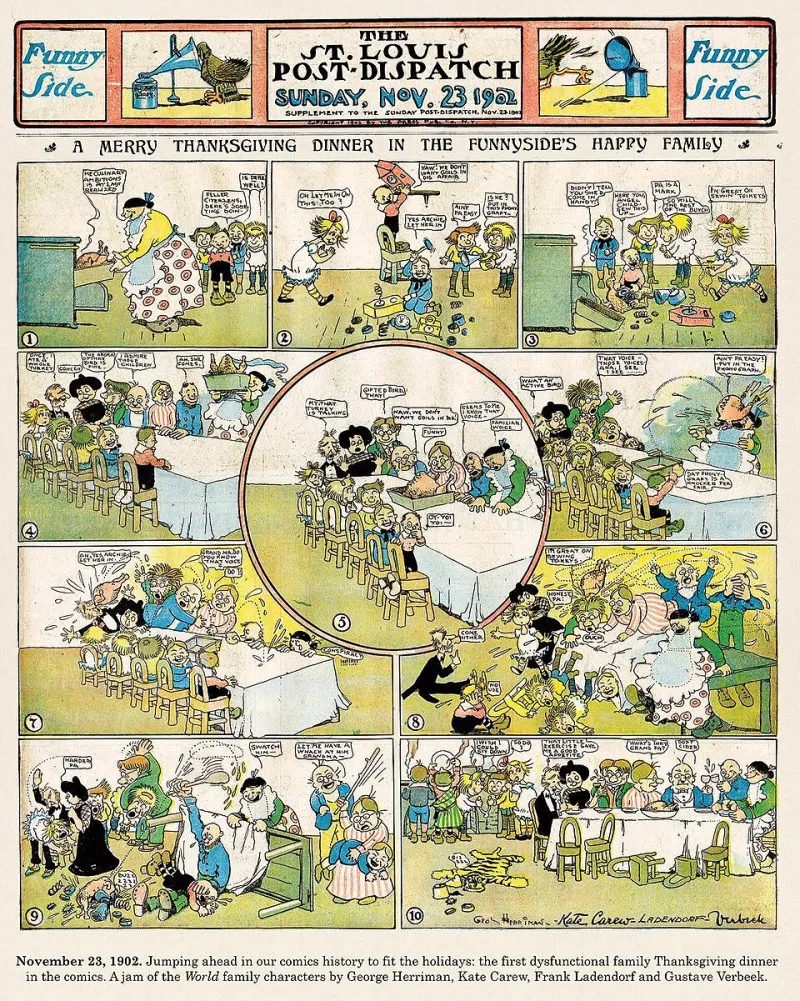
Photo: George Herriman (1880-1944), Kate Carew (1869-1961), Frank H. Ladendorf (1860-1943). Gustave Verbeek (1867-1937), Public domain, via Wikimedia Commons
Thanksgiving has always had a timing problem. The turkey needs hours. The sides need minutes. The uncle who wants to explain a podcast episode needs a diplomatic intervention. In 2026, a growing number of US families are trying a surprisingly simple fix: a 112-second timer for the toast, set visibly on the table before anyone passes the gravy.
The math is not magical, but the effect can be. One minute and fifty-two seconds is long enough for a real thought and short enough to prevent a second act. Call it the two-minute peace treaty. Call it a holiday heat lamp for gratitude. Either way, it is showing up in group chats, on kitchen counters, and in the kind of family text threads that usually end with someone sending a screenshot of a calendar invite.
A Timer, a Toast, and a Truce
The setup is almost aggressively low-tech. Someone — usually the host, sometimes the person who owns the loudest kitchen timer — places a phone, a sand timer, or a novelty game-show buzzer where everyone can see it. When the mashed potatoes land, the toast begins. When the timer hits zero, the talking stops and the eating resumes.
No one is crediting a single inventor. The idea seems to have bubbled up the way most good family hacks do: through trial, error, and one person saying, ‘We are not doing a forty-minute speech block again.’ By late 2026, the ritual has picked up enough steam that families are comparing notes the way people once compared stuffing recipes. Some use a phone timer. Some use an hourglass they bought for a white elephant exchange. One family in Ohio reportedly uses a small kitchen bell that is annoying enough to keep everyone honest.
The appeal is not that people hate toasts. It is that people love Thanksgiving more than they love watching a toast turn into a State of the Union address. A fixed window gives everyone permission to be sincere without becoming a hostage. It also gives the host a graceful way to say, ‘Let us eat,’ without saying, ‘Please stop talking.’
The Rules Families Are Making Up
There is no official rulebook, which is exactly why the etiquette is getting interesting. The most common guideline is simple: the timer is visible, not punitive. It is not there to boo anyone off stage. It is there to protect the mashed potatoes.
A few unofficial rules are already emerging. One person speaks at a time. No rebuttals, no fact-checks, no ‘well, actually’ detours. The speaker can be funny, serious, or brief — all are allowed. Applause is optional. If someone tears up, nobody rushes them, but the timer keeps ticking. And if the timer goes off mid-sentence, the speaker gets to finish the sentence, not the paragraph. That last rule is doing more heavy lifting than any gravy boat.
Some families have added a ‘no props’ clause after one relative attempted to use a pie as a visual aid. Others have a ‘one extension only’ policy, which sounds generous until you realize the extension is fifteen seconds and must be approved by the person carving the turkey. The rules are not about control. They are about creating a container. A toast with a boundary feels easier to give, especially for people who would rather swallow a whole dinner roll than speak in front of a crowd.
Why Two Minutes Works — and Where It Gets Awkward
The real benefit is not the countdown. It is the shape. A 112-second toast has a beginning, a middle, and a hard stop. That structure keeps gratitude from drifting into grievance. It also creates a shared moment where everyone is doing the same thing at the same time, which is rarer than it sounds at a holiday table.
The cap also functions as a gentle political fence. It does not ban opinions. It simply starves an argument of airtime. You cannot build a full debate in under two minutes — not a good one, anyway. The timer turns a potential spiral into a toast-sized thought. That is why some families describe it as less of a rule and more of a mood filter.
It can get awkward. Someone will forget the timer exists. Someone will test it. Someone will say, ‘I just have one quick thing,’ and then discover that one quick thing has three parts. The host has to resist the urge to become a referee. The trick is to treat the timer as furniture, not law enforcement. When it beeps, the table moves on. No lecture, no shame, no postgame analysis.
The Gravy Wait
In many households, the 112-second toast happens before the gravy is passed. That is not an accident. Gravy is a powerful motivator. Once the boat starts moving, attention splinters. By putting the toast first, families get the sentimental part out of the way while everyone is still seated, still hungry, and still willing to look up from their phones.
The gravy wait also gives the ritual a natural ending. The timer beeps, the toast is over, and the table exhales. Then the gravy moves. It is a small choreography, but rituals are made of small choreography. Thanksgiving already runs on it: the carving, the serving, the second wave of rolls. The 112-second toast just adds one more beat.
How to Try It Without Turning Dinner Into a Committee Meeting
If you want to test the idea this Thanksgiving, keep it light. Put a timer where everyone can see it. Explain the plan once, not five times. Say something like, ‘We are keeping toasts to under two minutes so we can get to the food while it is hot.’ Then let it happen.
Do not over-invite the rules. Do not print a laminated policy. Do not make a cousin serve as timekeeper unless that cousin genuinely enjoys being in charge of a beeping rectangle. The best version of the ritual is the one that feels obvious, not official.
Thanksgiving 2026 lands on Nov. 26, which means there is still time to decide whether your table is a timer table. Maybe it will feel silly. Maybe someone will ignore it. Maybe it will become the one thing everyone remembers — not because the toast was perfect, but because it ended before the argument started. In a holiday built on abundance, a hard stop for the speech might be the most generous thing on the table.