Penny Items, Typo Aisles, and Glitch Totals: The Case for Framing Your Strangest Receipt
Some people keep ticket stubs. Some keep birthday cards. In 2026, a stubborn slice of the internet is keeping something far less sentimental: the grocery receipt that rang up a single penny, the slip where “bananas” became “BANANAS!!!!,” or the drugstore total that landed on $112.00 and felt like a cosmic wink.
You’ll see them taped inside cabinet doors, tucked into phone cases, arranged in shadow boxes, and posted to social feeds with the caption “I can’t throw this away.” Call it the receipt museum. It’s part scrapbook, part evidence locker, and part joke about how deeply weird ordinary life can get.
Why a receipt, of all things?
A receipt is the least curated object in your life. It’s printed on flimsy paper, jammed into a wallet, and usually destined for the bottom of a bag. That’s exactly why it works as folk art. It has no filter. It doesn’t try to be pretty. It just records what happened at 4:37 p.m. on a Tuesday, including the fact that you bought three limes and a plunger.
The receipt museum is also a rebellion against the tidy version of adulthood. A framed vacation photo says “I have taste.” A framed receipt for a 47-cent clearance candy says “I have questions.” Both are valid. Only one is funny to guests.
The starter taxonomy of weird receipts
Not every receipt deserves a frame. Most are boring. The keepers tend to fall into a few familiar types.
The Penny Phantom
An item that scans for one cent. Sometimes it’s a pricing error, sometimes a loyalty reward, sometimes a mystery. The receipt doesn’t explain. It just shows a single penny and a product name that sounds like a spell. Frame it and you’ve captured a tiny economic anomaly.
The Typo Goblin
A receipt where the product name gets mangled by the system: “ORG CARROT” becomes “ORC CARROT,” “BAGUETTE” becomes “BAGUETT,” or a household cleaner shows up as “MOP JUICE.” The typo is the whole point. It’s accidental poetry from a cash register.
The Coupon Glitch
A total that looks like the register had a moment. Maybe the coupon came off twice. Maybe the discount exceeded the item price. Maybe the subtotal is lower than the tax in a way that makes no sense. The receipt becomes a souvenir of a system briefly losing its composure.
The Quantity Freak
One line item, quantity: 24. Sometimes it’s a party. Sometimes it’s a mistake. Sometimes it’s a person buying 24 bananas and refusing to explain. The receipt is a short story with no ending.
The Palindrome Total
$45.54. $12.21. $112.11. The total mirrors itself and suddenly the receipt feels like a sign. It isn’t. That’s what makes it fun. Humans are pattern-seeking machines, and a convenience store receipt is a cheap place to find a pattern.
The Accidental Poem
A list of items that reads like a line of verse when you stack it: “ICE / LEMON / SALT / REGRET.” Maybe it’s just groceries. Maybe it’s a mood. The frame turns it into a found poem.
The Time-Stamp Weirdo
A receipt from 3:33 a.m., or one printed at 11:11, or a date that matches a birthday. The item list is irrelevant. The timing is the artifact.
The frame is the punchline
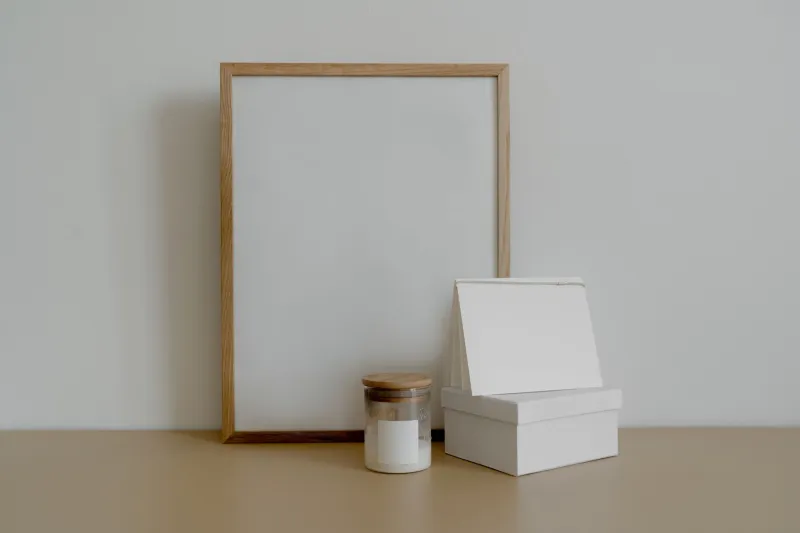
You don’t need a custom frame. A cheap shadow box, a thrift-store frame, a clipboard, or a strip of washi tape on the fridge all work. The humor comes from the mismatch: a disposable object treated like a museum piece. The receipt is saying “this was a normal errand.” The frame is saying “not to me.”
There’s also a practical reason to display a copy instead of the original. Thermal paper fades. If you love the receipt, scan it first and frame the print. Keep the original in a dark drawer like the weird little document it is.
Before you post: the privacy pass
Receipts are boring until they aren’t. They can carry card digits, loyalty numbers, store locations, transaction IDs, barcodes, cashier names, and timestamps. Before you turn your grocery slip into content, do a slow pass.
- Blur or crop card digits, even the last four if they’re paired with your name or a loyalty account.
- Cover loyalty numbers, phone numbers, and any QR code or barcode that could link back to an account.
- Crop store addresses if the location is close to home, and blur cashier names or employee IDs.
- Remove transaction IDs and authorization codes. They’re not decorative.
- Don’t rely on a marker swipe. Check the photo at full size, then check it again.
- Skip receipts for prescriptions, medical items, or anything tied to a return or warranty.
- Ask before posting someone else’s receipt. A funny total is not consent.
The safest move is to recreate the funny part on a clean background or screenshot only the item lines. You can still get the joke without handing out your shopping history.
How to keep thermal paper from vanishing
Most receipts are printed on thermal paper. Heat, light, friction, and time are its enemies. It doesn’t need a museum-grade setup, but it does need a little respect.
- Keep it cool and dark. A shoebox in a closet beats a sunny corkboard.
- Don’t laminate it. The heat can turn the paper black or blank.
- Avoid tape and rubber bands directly on the print. Use a paper sleeve or an acid-free folder.
- Don’t leave it in a hot car, near a radiator, or under a laptop.
- Scan or photograph it at high resolution as soon as you decide to keep it.
- Store it flat. Folding and rubbing can wear away the coating.
- If you frame it, frame the scan. The original can live in the dark like a tiny, boring vampire.
The real appeal: small proof you were there
The receipt museum isn’t really about groceries. It’s about capturing the tiny, unglamorous moments that make a day feel specific. A bizarre total, a typo, a penny item—these are small proofs that you were alive and paying attention in the checkout line.
It’s the same energy KCT112 loves in internet artifacts: low stakes, high specificity, and just weird enough to screenshot. So go ahead. Save the receipt. Frame the nonsense. Just blur the card digits first.