The Best Man Gets a Shot Clock: Why Wedding Toasts Now Come With a Countdown

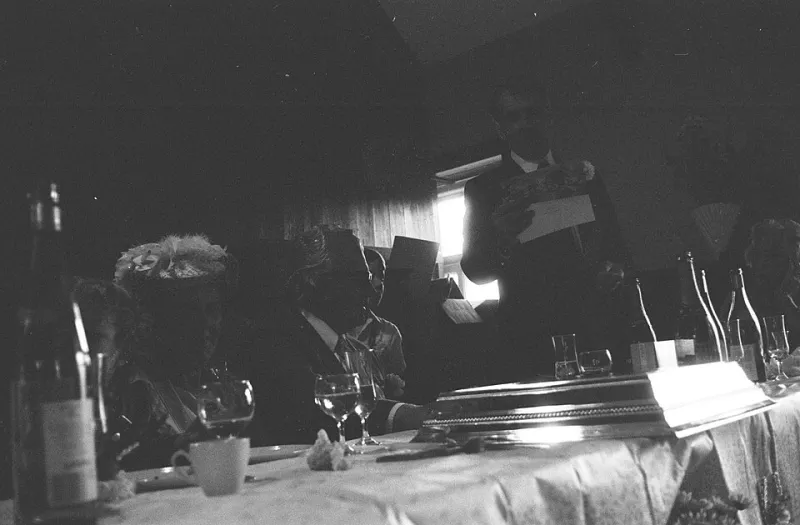
Photo: epSos.de, CC BY 2.0, via Wikimedia Commons
There is a moment at nearly every wedding reception when the room senses trouble. The best man has thanked the couple, complimented the bride, roasted the groom, and then—somewhere around the four-minute mark—he begins scrolling back through his phone for another story. The energy dips. The caterer starts eyeing the entrée. Somebody’s uncle mutters, “He’s going long.”
In 2026, a small but growing number of couples are trying to end that moment before it starts. They are handing wedding-party speakers a hard limit: 112 seconds. That is 1 minute and 52 seconds, not quite two minutes, and just long enough for a decent setup, one real laugh, and a sincere finish. Some receptions now feature a visible countdown clock near the DJ booth. Others use a color-changing light, a friendly card from the planner, or a gentle music cue that swells if the speaker hits the limit.
And yes, some couples are adding a scoreboard.
The Shot Clock Comes to the Reception
The trend did not begin at a wedding-industry conference. It seems to have grown out of the same online culture that made every viral video feel like it needs a timer. Wedding content creators started posting “112-second toast challenges” as a joke, then as a party trick, and eventually as a practical planning tool. Couples who had survived one too many rambling speeches began asking their DJs and planners whether a countdown was possible.
“At first it was a novelty,” says Dana Whitfield, a wedding coordinator in Columbus, Ohio, who has worked receptions across the Midwest. “Now I have couples asking for it before they ask about the cake cutting. They want the speeches to feel lively, not like a compliance meeting. The 112-second thing is a way to make a limit feel playful instead of punitive.”
The mechanics are simple. The speaker gets a warning at 90 seconds, a visible cue at 112, and a graceful exit strategy. Some planners recommend a “callback line” the speaker can use if the clock runs out: a final toast, a quick thank-you, and a handoff to the DJ. The best versions feel less like a buzzer and more like a game show with good lighting.
The Scoreboard Is the Whole Bit
The scoreboard is where the trend gets divisive. In some setups, guests hold up numbered cards like figure-skating judges. In others, the DJ announces an unofficial score based on laughter, timing, and whether the speaker remembered the couple’s names correctly. One recent reception in Nashville reportedly used a large digital display that flashed “112” in green when a speaker landed under the limit and a softer amber “OVERTIME” when things went long.
For guests, the appeal is obvious. A wedding reception has a lot of moving parts, and speeches are often the part where momentum stalls. A visible clock gives the room a shared focal point. It also gives the speaker a clear job: be brief, be warm, get out. The scoreboard turns what could feel like a scolding into a collective bit.
“People laugh at the countdown,” Whitfield says. “They don’t feel like they’re being disciplined. They feel like they’re in on the joke.”
That distinction matters. A hard timer imposed by a venue can feel cold. A countdown presented as a playful family tradition can feel like part of the entertainment. The couples pulling it off tend to treat 112 seconds as a creative constraint, not a punishment.
Why Guests Are Quietly Thrilled
Ask frequent wedding guests about long speeches and you will hear a familiar list of grievances: the inside joke nobody else understands, the ex-girlfriend tangent, the slideshow that will not load, the best man who mistakes the reception for a roast. A 112-second limit does not solve bad material, but it does limit the damage.
It also protects the speaker. A hard stop gives the best man, maid of honor, or parent a built-in exit. They can prepare a tight story, land the toast, and sit down before their nerves turn into rambling. For people who dread public speaking, the clock is less a threat than a safety net.
Guests seem to appreciate the pacing most. A reception with three short speeches leaves more room for dancing, dessert, and the kind of unstructured mingling that makes weddings feel worth attending. In a season full of Saturday events, brevity can read as generosity.
The Etiquette Backlash
Not everyone is sold. Wedding traditions carry emotional weight, and a timer can feel like it is measuring the wrong thing. A best man’s memories are not a TikTok clip. A parent’s toast may need room to breathe. Some guests argue that the best speeches earn their length, and that a couple who schedules a countdown is prioritizing efficiency over sentiment.
There is also the awkward question of enforcement. What happens when the groom’s grandfather ignores the clock? Who tells him to wrap it up? A DJ with a music cue can become the villain of the reception. A scoreboard can make a heartfelt moment feel like a competition.
The compromise many couples are landing on is a soft limit with hard boundaries. The speaker is told about the 112-second target in advance. The DJ has a cue ready but does not use it unless the speech is clearly spiraling. The scoreboard stays playful and optional. The goal is not to humiliate anyone; it is to keep the room together.
The New Wedding-Party Prep
For wedding parties, the 112-second rule has created a new kind of preparation. Best men are timing their drafts on their phones. Maids of honor are cutting the third anecdote. Couples are adding a line to the wedding-party group chat: “You have 112 seconds. Use them wisely.”
Some speakers love the constraint. A tight limit forces them to decide what the story is actually about. The best toasts tend to have one clear memory, one genuine observation, and one clean wish for the couple. That structure fits comfortably into 112 seconds. The worst toasts tend to have four openings and no ending, which is exactly what a countdown exposes.
There is also a social benefit: the clock gives everyone something to talk about besides the chicken. Guests compare times. Someone claims they could do it in 90. Someone else says the father of the bride deserved an extra 20 seconds. The reception gets a little game to play.
What 112 Seconds Actually Buys
Strip away the scoreboard and the countdown clock, and the trend is asking a simple question: what do we actually want from a wedding toast? The answer is probably not length. It is presence. A speaker who is prepared, funny, and sincere can do a lot in under two minutes. A speaker who is unprepared can make ten minutes feel like a hostage situation.
The 112-second toast is not a universal fix. Some moments deserve more room. Some families will find the whole thing fussy. But for couples trying to keep a reception moving without cutting the emotional core, the shot clock offers a surprisingly useful compromise: a firm limit, a soft touch, and a room that knows exactly when to laugh, when to cheer, and when to let the best man sit down.